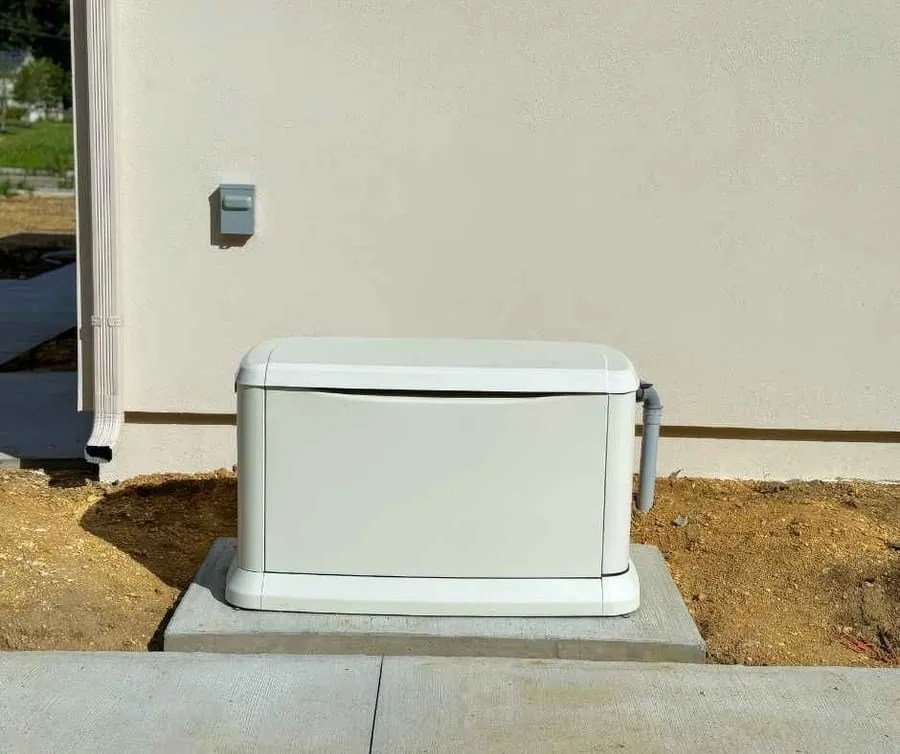
When the lights go out, a home backup generator isn't just a convenience; it's a lifeline. But panic-buying the biggest model you can find or, worse, undersizing your solution can lead to frustration, damage, or even danger. The secret to true preparedness lies in precisely Sizing Your Home Backup Generator: Power Needs Explained. It’s about matching your generator's capacity to your household’s specific demands, ensuring you have reliable power without breaking the bank.
Think of it like buying shoes: too small, and they pinch; too big, and you stumble. Your generator needs to fit just right. This isn't just about total wattage; it's about understanding how your home uses electricity, especially during an outage.
At a Glance: Your Generator Sizing Essentials
- Don't Guess Your Power Needs: Over- or undersizing leads to wasted money or insufficient power.
- Wattage Isn't the Only Factor: Understand running watts (continuous) and starting watts (surge) for motor-driven appliances.
- Calculate Your True Load: Sum essential appliance wattages, factor in diversity, and account for the largest single starting surge.
- Generators Are Rated in kVA (Kilovolt-Amperes): Convert your calculated peak wattage to kVA using your region's Power Factor.
- Add Buffers: Include safety margins and account for environmental factors like altitude and temperature.
- Professional Help is Key: For whole-home systems, an electrician's expertise is invaluable for accurate sizing and installation.
Decoding the Language of Power: kW, kWh, and kVA
Before we dive into calculations, let's clarify some fundamental terms. These are the building blocks for understanding your home's energy profile.
- Power (kW - Kilowatts): The Instantaneous Muscle
Kilowatts measure the rate at which electricity is used or produced at any given moment. It’s the "muscle" that runs your appliances. A higher kW rating means a generator can handle more demanding appliances simultaneously, like your central air conditioner or an electric oven. When you see a generator advertised with a "running watts" or "rated power," that's its continuous kW output. - Energy (kWh - Kilowatt-hours): The Total Endurance
Kilowatt-hours measure the total amount of electricity consumed over a period. This is what your utility bill tracks. While kW tells you if a generator can run your fridge, kWh helps estimate how long it can run it given a certain amount of fuel or battery capacity. For instance, a 1 kW appliance running for 1 hour uses 1 kWh of energy. - Real Power (kW) vs. Apparent Power (kVA - Kilovolt-Amperes): The Full Picture
This is where things can get a little nuanced, but it's crucial for generator sizing. - Real Power (kW): This is the "useful" power that actually performs work—lighting bulbs, heating elements, turning motors. It’s what you pay for on your utility bill.
- Apparent Power (kVA): This is the total power flowing in an electrical circuit. It includes both the useful real power (kW) and something called "reactive power," which is consumed by magnetic fields in inductive loads (like motors in refrigerators or AC units). Generators are often rated in kVA because they have to supply all the power, both real and reactive.
- The Relationship: The bridge between kW and kVA is the Power Factor (PF).
- Power Factor (PF): The Efficiency Score
The Power Factor is a number between 0 and 1 that indicates how efficiently electrical power is converted into useful work. - A PF close to 1.0 means nearly all the apparent power is useful real power (e.g., a simple incandescent light bulb or a resistive heater).
- A lower PF (e.g., 0.7-0.9) indicates a higher proportion of reactive power, common with motor-driven appliances.
- Generators must be sized to provide enough kVA to meet both the kW and kVAR (reactive power) demands of your home. Typical Power Factors for residential homes in the US/Canada range from 0.8 to 0.85, while in Europe/Australia, they might be slightly higher, around 0.9.
Understanding these terms is your first step towards confidently determining the right generator size for your needs.
Step-by-Step: Pinpointing Your Home's Exact Power Needs
Sizing a whole-home generator isn't about guesswork; it's a systematic process. Grab a pen and paper (or a spreadsheet) as we walk through calculating your household's peak power demand.
Step 1: Identify Your Must-Haves vs. Nice-to-Haves
Before you add up every single appliance, decide what absolutely must run during an outage. This often dictates the core size of your generator.
- Must-Haves (Essentials):
- Refrigerator/Freezer (food preservation)
- Basic Lighting (critical rooms)
- Wi-Fi Router/Modem & Phone Chargers (communication)
- Medical Devices (CPAP, oxygen concentrator)
- Heating or Cooling (furnace fan, central AC, window AC – depending on climate)
- Well Pump (if you rely on well water)
- Sump Pump (flood prevention)
- Garage Door Opener
- Nice-to-Haves (Comfort & Convenience):
- Television/Entertainment Systems
- Washing Machine/Dryer
- Dishwasher
- Electric Oven/Range
- Hair Dryer, Toaster
Focus on the "must-haves" first. If your budget and aspirations allow, you can then add some "nice-to-haves" to your calculation.
Step 2: Tally Up Your Essential Appliance Wattage (Total Connected Load)
Now, list every essential appliance and find its running wattage. This information is usually on the appliance label (often near the power cord), in the owner's manual, or on the manufacturer's website. If you only see amps and volts, multiply them: Watts = Amps × Volts.
Example Appliance Wattages (Approximate):
| Appliance | Running Watts (W) | Surge Multiplier (for starting) |
|---|---|---|
| Refrigerator (energy-efficient) | 150-300 | 4.0 |
| Refrigerator (older/large) | 400-600 | 4.0 |
| Central AC (3-ton) | 3,000-5,000 | 4.0-5.0 |
| Furnace (blower fan) | 500-1,000 | 3.0 |
| Electric Furnace (heating coils) | 5,000-10,000 | 1.0 (resistive) |
| Well Pump (1/2 HP) | 1,000-1,500 | 5.0-6.0 |
| Microwave Oven | 800-1,500 | 1.0 |
| Coffee Maker | 800-1,200 | 1.0 |
| Sump Pump (1/3 HP) | 800-1,500 | 3.0-4.0 |
| Lights (LED) | 10-60 per fixture | 1.0 |
| Wi-Fi Router/Modem | 10-30 | 1.0 |
| TV (LED) | 50-200 | 1.0 |
| Medical Devices (CPAP) | 30-60 | 1.0 |
| Washing Machine | 1,200-2,000 | 3.0 (for motor) |
| Electric Water Heater | 4,000-5,000 | 1.0 |
| Calculation: Total Connected Load (W) = Σ (Quantity × Wattage per unit) |
- Let's create a simplified example household:
- Refrigerator: 400W
- Furnace Fan: 800W
- Well Pump: 1,200W
- Lights (10 LED x 15W): 150W
- Wi-Fi: 20W
- Microwave: 1,000W
Total Connected Load = 400 + 800 + 1200 + 150 + 20 + 1000 = 3,570W
Step 3: Apply a Diversity Factor (Because Not Everything Runs at Once)
Realistically, you won't have every single essential appliance running at its maximum wattage simultaneously. The diversity factor accounts for this. It's a percentage reduction applied to your total connected load.
- Residential Homes: Typically use a diversity factor of 70-85%. This means you're assuming 70-85% of your connected load will be active at any given time.
Calculation: Effective Continuous Load (W) = Total Connected Load (W) × Diversity Factor - Using our example (3,570W) and a common residential diversity factor of 0.80:
Effective Continuous Load = 3,570W × 0.80 = 2,856W
Step 4: Account for Starting Surge (Motor Loads)
This is a critical step often overlooked. Appliances with electric motors (refrigerators, AC units, well pumps, washing machines, garage door openers) demand a significantly higher burst of power to start than they do to run. This "starting surge" can be 3 to 6 times their running wattage.
Crucial Point: You only need to account for the single largest starting surge that could occur while other continuous loads are running, not the sum of all potential surges. Your generator must be able to handle this momentary peak.
Calculation: Starting Surge (W) = Running Watts × Surge Multiplier
- From our example essential appliances, let's identify the largest surge:
- Refrigerator: 400W × 4.0 = 1,600W
- Furnace Fan: 800W × 3.0 = 2,400W
- Well Pump: 1,200W × 5.0 = 6,000W
- In this case, the Well Pump (6,000W) has the largest starting surge.
Step 5: Calculate Combined Peak Demand (The Generator's True Test)
This is the absolute highest power demand your generator will face. It occurs when your effective continuous loads are running, and the single largest motor-driven appliance suddenly kicks on.
Calculation: Combined Peak (W) = Effective Continuous Load (W) + Largest Starting Surge (W)
- Using our example:
Combined Peak (W) = 2,856W (Effective Continuous Load) + 6,000W (Largest Surge - Well Pump) = 8,856W
Step 6: Convert to Apparent Power (kVA)
Since generators are typically rated in kVA, we need to convert our calculated peak wattage using the Power Factor. Remember, kW = kVA × Power Factor, so kVA = kW ÷ Power Factor.
Calculation: Required kVA = Combined Peak (W) ÷ Power Factor ÷ 1000 (to convert Watts to Kilowatts)
- Let's assume a typical residential Power Factor (PF) of 0.85 for North America.
Required kVA = 8,856W ÷ 0.85 ÷ 1000 = 10.42 kVA
Step 7: Add a Safety Margin (Future-Proofing Your Power)
It’s always wise to build in a buffer. A 20% safety margin is an industry standard to accommodate minor miscalculations, future appliance additions, or unexpected loads. This also prevents your generator from running at 100% capacity constantly, which can shorten its lifespan.
Calculation: Safe Capacity (kVA) = Required kVA × 1.20
- Using our example:
Safe Capacity = 10.42 kVA × 1.20 = 12.50 kVA
Step 8: Apply Environmental Derating (Where You Live Matters)
Generators aren't always 100% efficient in all conditions. High altitudes and extreme temperatures can reduce their effective output.
- Altitude: A generator loses roughly 3% of its power for every 1,000 feet above 500 feet elevation.
- Temperature: A generator loses about 1% of its power for every 10°F above 77°F (25°C).
You'll need a derating factor (e.g., 0.90 for significant altitude/heat). If you live at sea level in a temperate climate, this factor might be negligible.
Calculation: Effective Capacity (kVA) = Safe Capacity (kVA) × Derating Factor - Let's assume our example home is at 2,000 feet and experiences hot summers, leading to a derating factor of 0.95.
Effective Capacity = 12.50 kVA × 0.95 = 11.88 kVA
Step 9: Select the Nearest Standard Generator Rating
Finally, compare your calculated Effective Capacity to standard generator sizes available on the market. Always round up to the next available standard kVA rating.
- Common North American kVA ratings: 5, 7.5, 10, 12, 15, 20, 25, 30, 40, 50, 60, 80, 100 kVA.
- For our example, with an Effective Capacity of 11.88 kVA, the closest standard rating is 12 kVA. This generator would be a suitable fit for our example household's essential power needs.
Beyond Power: Estimating Outage Duration and Energy Needs
Sizing your generator for instantaneous power (kW/kVA) is only half the battle. You also need to consider how long you might need that power, which brings us back to energy (kWh) and fuel.
Thinking about typical outage durations helps you decide on fuel capacity or battery reserves:
- Short Outages (A Few Hours): For brief disruptions, a smaller fuel tank or portable generator might suffice. You're mostly concerned with keeping the fridge cold and a few lights on. (Estimate: 6-10 kWh for basic essentials).
- Moderate Outages (1-2 Days): Here, you'll want to run essentials plus some comfort items like a TV or perhaps a washing machine. Fuel storage becomes more important. (Estimate: 20-40 kWh for essentials + comfort).
- Extended Outages (A Week or More): This is where a whole-home standby generator with a continuous fuel source (like natural gas or a large propane tank) truly shines. You'll likely want to power major appliances and HVAC consistently. (Estimate: 60-90 kWh for major appliances, HVAC, communication).
If you’re leaning towards a battery-based system, these kWh estimates will help you determine the necessary battery bank size. For fuel generators, these estimates guide your fuel storage planning. You can also dive deeper into the pros and cons of various generator fuels to make an informed decision about your fuel source.
Generator Types and Fuel Consumption
The type of generator you choose will also influence your sizing and operational considerations.
Fuel Generators (Gasoline, Diesel, Natural Gas, LPG)
These are the workhorses of home backup. They provide continuous power as long as fuel is available.
- Pros: High power output, long run times (with adequate fuel supply), suitable for whole-home backup.
- Cons: Require fuel storage (gasoline, diesel, LPG) or connection to a utility line (natural gas), produce emissions, require regular generator maintenance tips, can be noisy.
Fuel Consumption Estimation:
To get a rough idea of how much fuel you'll need, you can use this formula:Fuel Consumption (L/hr or m³/hr or kg/hr) = Generator Output (kW) × Fuel Rate (L/kWh or m³/kWh or kg/kWh) × Load Factor - Typical Fuel Rates (at 75% Load):
- Diesel: ~0.27 L/kWh
- Gasoline: ~0.33 L/kWh
- Natural Gas: ~0.28 m³/kWh
- LPG (Propane): ~0.30 kg/kWh
For example, our 12 kVA (approx. 10.2 kW real power at 0.85 PF) generator running at 75% load (7.65 kW) on natural gas would consume approximately:7.65 kW × 0.28 m³/kWh = ~2.14 m³/hrof natural gas.
Battery-Based Generators (Often with Solar Integration)
These systems rely on stored energy and are increasingly popular for their quiet operation and environmental benefits.
- Pros: Quiet, no emissions, lower maintenance, can be recharged by solar panels, modular and expandable.
- Cons: Finite capacity (limited by battery bank size), higher initial cost, charging time can be a factor.
For battery systems, your kWh calculation for outage duration becomes paramount, as it directly translates to battery bank size (e.g., a 10 kWh battery bank can deliver 1 kW for 10 hours or 10 kW for 1 hour).
Understanding different types of home generators will help you select the best fit for your calculated power needs and lifestyle.
Smart Strategies for Confident Generator Sizing
You've got the numbers, now let's layer in some practical wisdom to ensure you make the best decision.
Check Appliance Labels and Your Breaker Panel
The most accurate data for your appliances will come directly from their labels or manuals. For your home's overall electrical setup, understanding your home's electrical panel and individual circuit breakers can offer insights into which circuits supply which loads. If labels are missing, online searches for your specific model number often yield results. For devices listing only amps and volts, remember: Watts = Amps × Volts. For 240V appliances (like central AC, electric dryer, or electric oven), use the 240V figure.
Track Utility Bills for Benchmarking
Your past utility bills can provide an average energy consumption (kWh) over time, giving you a ballpark idea of your home's overall electrical appetite. While not granular enough for precise sizing, it helps contextualize your calculations and identify major energy hogs.
Consult Professionals: Electricians and Generator Dealers
For whole-home standby generators, professional installation is mandatory, and consulting an experienced electrician is highly recommended. They can:
- Conduct a precise load calculation for your specific home.
- Advise on local codes and regulations.
- Help you choose the right transfer switch. Understanding how a transfer switch works is vital for safety and proper operation.
- Recommend the ideal generator size and placement.
Their expertise minimizes errors and ensures a safe, compliant installation.
Plan for the Future
Think ahead! Are you considering:
- Adding an electric vehicle (EV) charger?
- Installing solar panels (which can integrate with battery backup systems)?
- Upgrading to a larger central AC unit?
- Finishing a basement with new appliances?
Building in a safety margin (as discussed in Step 7) helps future-proof your investment, preventing you from needing an upgrade sooner than expected.
Avoid Oversizing: The Hidden Costs
While it's tempting to "go big or go home," oversizing a generator comes with significant drawbacks:
- Higher Upfront Cost: Larger generators cost more to purchase and install.
- Increased Fuel Consumption: An oversized generator will burn more fuel even when running at a low load, leading to wasted resources.
- "Wet Stacking": Running a generator consistently below 30% of its rated capacity can lead to unburnt fuel accumulating in the exhaust system. This causes black smoke, reduced efficiency, and can significantly shorten engine life. The optimal operating range for most generators is 50-75% of their rated capacity.
The goal is to find the right size, not necessarily the largest.
Advanced Considerations for Specific Needs
- Sensitive Electronics: If you have sensitive electronics (computers, high-end audio equipment), look for inverter generators or models with a low Total Harmonic Distortion (THD), typically below 5%. This ensures a cleaner, more stable power output that won't damage delicate devices. You might even consider a 10-15% buffer for these loads.
- Cold Climates: For homes in regions with harsh winters, consider generators equipped with block heaters, battery warmers, or heated enclosures to ensure reliable starting in freezing temperatures.
- Large Motors/Industrial Equipment: For specialized applications, especially in commercial or agricultural settings, you might encounter three-phase power requirements, which need specific three-phase generators. Residential homes almost always use single-phase power.
Leverage Online Generator Sizing Calculators
Many generator manufacturers and retailers offer free online sizing calculators. These tools can automate many of the steps we've outlined, providing a quick estimate. While useful for initial planning, always cross-reference with your own detailed calculations and, for critical systems, a professional assessment. They often incorporate regional standards, provide real-time results, and can even offer fuel consumption estimates.
Common Questions & Misconceptions About Generator Sizing
Let's clear up some frequent points of confusion.
Q: Do I need to add up all the watts for every appliance in my house?
A: No, not usually for a whole-home backup. You first decide what's "essential" (Step 1). Then, you add those essentials, apply a diversity factor (since not all run simultaneously), and account for the largest single starting surge. Trying to power absolutely everything usually leads to an unnecessarily oversized and expensive generator.
Q: Can I just get a generator rated in "watts" instead of kVA?
A: Portable generators are often rated in watts (kW), which makes them easier to understand. Whole-home standby generators are frequently rated in kVA. Since kW = kVA × Power Factor, you can easily convert. If a generator is rated at 20 kVA and has a power factor of 0.85, its real power output is 20 kVA * 0.85 = 17 kW (or 17,000 watts). Always use the real power (kW) for your load calculations if the generator is only listed in kVA and vice versa.
Q: Is it okay for my generator to run at less than half its capacity?
A: Not long-term. Running a generator consistently below 30% capacity can lead to "wet stacking," reduced fuel efficiency, and a shorter engine lifespan. It's best to size your generator so it runs in the 50-75% load range for optimal performance and longevity.
Q: Should I worry about my neighbors' power needs affecting my generator?
A: No, your home's electrical system is isolated from your neighbors' through your service panel. Your generator will only power the circuits you connect to it via a transfer switch.
Q: What if I want to power my entire home, including my electric oven and central AC?
A: This is absolutely achievable, but it will require a significantly larger generator. You'll need to include the running wattage of all these large appliances in your "Total Connected Load" and carefully account for the starting surge of the largest motor (likely your AC unit). The calculation process remains the same, just with higher numbers.
Your Next Step to Uninterrupted Power
Sizing your home backup generator might seem like a maze of numbers, but by systematically breaking down your needs and understanding the core concepts, you've equipped yourself with the knowledge to make an informed decision. The ideal generator isn't about brute force; it's about smart, efficient, and reliable power that precisely matches your household's lifestyle and preparedness goals.
Take the time to accurately calculate your essential loads, consider your future needs, and don't hesitate to consult with qualified electricians. They are your allies in ensuring a safe and effective installation. Investing in the right-sized generator is an investment in peace of mind, knowing that when the grid goes dark, your home will remain a beacon of comfort and security.
Ready to explore your options now that you know your sizing? Check out our guide to the best home backup generators to find the perfect fit for your newly calculated power needs.